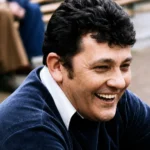
Even if Yugoslavia had not produced any other athletes, Miroslav Cerar would have put it on the sports map of Europe and the world with his achievements. From his first World Championships (Moscow, 1958) throughout the entire 1960s, he was the best gymnast in the world, winning 30 medals and becoming a double Olympic champion.
Born in Ljubljana in 1939, Cerar grew up in difficult conditions, and as a child, he was small and frail. He was skinny and completely uninterested in sports and gymnastics until one physical education class in the third grade. At that time, he couldn’t succeed at anything, and he left the gym in tears, ridiculed by other children. In defiance of them, he vowed to become a gymnast! And he more than fulfilled that promise!
Cerar’s international career began in 1958 when he won a bronze medal on the pommel horse at the World Cup in Moscow. At the 1960 Olympic Games in Rome, Cerar finished eighth and ninth with the Yugoslav gymnastics team. He competed individually only on the parallel bars, where he placed fifth.
2 Olympic gold medals, 4-time World Champion, and 9-time European Champion
At the 1961 European Championships held in Luxembourg, he won four gold medals: in the all-around, on the pommel horse, on the rings, and on the vault, and he also won a bronze medal on the parallel bars. At the 1962 World Cup in Prague, he won gold on the parallel bars, surpassing Boris Shakhlin. At the 1963 European Championships in Belgrade, he won an impressive six medals: four gold, one silver, and one bronze. At the 1964 Olympic Games, he won two medals, one gold and one bronze, and finished sixth on the parallel bars.
At the 1965 European Championships held in Antwerp, he won gold on the rings, silver on the pommel horse, and bronze on the vault. Viktor Lisitsky won gold on the pommel horse, which was one of only two defeats Cerar experienced in his international career on that apparatus. The other defeat came in 1967 at the European Championships against Mikhail Voronin.
In the meantime, Cerar won a gold medal at the 1966 World Cup in Dortmund on the pommel horse and a bronze on the rings. At the 1968 Olympic Games in Mexico City, he finished 6th with the Yugoslav team and once again won gold on the pommel horse individually. In 1969, Cerar won gold again at the European Championships, and at the 1970 World Championships held in Ljubljana, he won his third gold and the title of world champion on the pommel horse.
Miroslav Cerar concluded his active gymnastics career in 1971 after suffering an injury during a competition in Japan. He was chosen as the Yugoslav Athlete of the Year three times, in 1961, 1963, and 1964. In 1999, Cerar was inducted into the International Gymnastics Hall of Fame.
Privately, Cerar completed his law studies and worked as a lawyer.