After the proclamation of the new Constitution in 1963, the FPRY was transformed into the SFRY. In the same year, banknotes with the new name of the state were printed, while those bearing the old name remained in circulation. The stylistic design was initially unchanged, but in 1965 a banknote in a new style was printed, and that style would remain in use until 1985. These banknotes became a symbol of Yugoslav prosperity and a high standard of living.
The first SFRY banknotes had the same motifs as the previous series from 1955, with the only change being the new name of the state. The 100-dinar note features, on its obverse, the portrait of a girl from the Croatian region of Konavle, and on the reverse a panorama of Dubrovnik.
The 500-dinar note features, on its obverse, a mower-woman, and on the reverse a harvest scene.
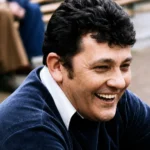
The 1000-dinar note shows, on its obverse, the portrait of metalworker Arif Heralić, and on the reverse a panorama of the Zenica Steelworks, where Arif worked. At the end of 1954, Arif was photographed by a photojournalist from the newspaper Borba for a feature about the steelworks in Zenica. The smiling worker’s picture eventually reached officials at the Institute for Manufacturing Banknotes, and his portrait appeared the following year on the 1000-dinar denomination. Arif tried to obtain financial compensation from the state for the use of his likeness, but without success. The state responded only by using his image again, on the 10-dinar note of 1965. His attempt to receive what he believed he was owed was the subject of the documentary film “Devaluation of a Smile” (1967). The film was the most significant social critique presented in socialist Yugoslavia up to that time, and after political pressure, TV Zagreb declared it a “program-political mistake.” Arif died in poverty as a disabled worker and chronic alcoholic, leaving behind eleven children.
The 5000-dinar note features, on its obverse, a relief by Ivan Meštrović depicting the “Kosovo Maiden” and a warrior. The relief was part of the unrealized design for the Vidovdan Temple intended to be built at Gazimestan. The reverse shows the building of the National Assembly. All designs were by the painter Miodrag Petrović, while the engravers were Tanasije Krnjajić and Božidar Kocmut.
On the 1965 banknotes, the motifs of the previous series were retained, but due to currency denomination their nominal values were changed. They were put into circulation on the last day of 1965 and remained legal tender until the first day of 1980. Entirely new in style was the red 100-dinar note. On its obverse appears the Peace Monument in the form of a horseman, a sculpture by Antun Augustinčić located in front of the United Nations building in New York.
The “red hundred” had a long life and, in a sense, became a symbol of Yugoslav socialist prosperity and a high standard of living. It was printed four times: in 1965, 1978, 1981, and 1986. It remained legal tender until January 1, 1990.
The period that followed was very favorable for the stability of the dinar. The 1000-dinar note of 1974 would be the highest denomination until 1985, when the 5000-dinar banknote depicting Josip Broz was printed, marking the beginning of the dinar’s decline into inflation.
The dinar of 1968 introduced a new stylization of banknotes, already used on the “red hundred” three years earlier.
They featured the earlier motifs of the mower-woman, metalworker Arif Heralić, and Meštrović’s relief. They were released into circulation that same year and withdrawn two decades later.
In 1970, the 500-dinar note was printed; its obverse shows the monument to Nikola Tesla, a work by sculptor Fran Kršinić, with a spiral coil of Tesla’s transformer in the background. Tesla was the first prominent historical figure to appear on a banknote after the war. It entered circulation the following year and remained legal tender until January 1, 1990.
All designs for the banknotes up to that point were created by Miodrag Petrović. The 20-dinar note in purple, depicting a ship, was issued in 1974. The design was created by Nusret Hrvanović. It entered circulation the following year and was withdrawn on the last day of 1989.
The 1000-dinar note was designed by Andrija Milenković, whose wife posed for the portrait of the peasant woman with a scarf. Most of these banknotes were printed several times in the following years, with the only changes being the signatures of officials.
The first banknote featuring Tito’s portrait was issued in 1985, five years after his death. It had a value of 5000 dinars. The conceptual design was created by academic painter Dragiša Andrić, the portrait by painter Nusret Hrvanović—his name is printed on Tito’s left shoulder—and the engravers were Dragiša Andrić and Trento Cionini, an Italian. This banknote is also remembered for an error: on banknotes with the letter codes AA and ZA, the year of Tito’s death is printed as 1930 instead of 1980.
The next banknote, due to accelerating inflation, had a value of 20,000 dinars. It featured a somewhat frowning and pensive, even worried, Alija Sirotanović, a model worker and hero of socialist labor.
At the beginning of the 1980s, a decision was made to replace the existing series of banknotes with a new, more modern one. In the new series, each individual banknote was supposed to represent one of the Yugoslav republics; the obverse would feature a historical figure from that republic, and the reverse a motif from that republic. The smallest note, 10 dinars, was meant to represent the smallest republic, Montenegro, while the largest existing note would represent the largest republic, Serbia. A new 5000-dinar banknote was to represent Yugoslavia. The largest denomination was to be issued first, followed gradually by the replacement of lower denominations.
The banknote featuring Vuk Karadžić, representing Serbia, was planned to have a value of 1000 dinars. All printing plates were finished and the note was ready for production, but it was never released into circulation. Due to hyperinflation, there was a need for banknotes of increasingly higher values, not lower ones. The plates for the Vuk Karadžić banknote were modified so that the nominal value would be 10,000 dinars. But then a political problem emerged, because a banknote featuring Vuk Karadžić could not be of higher denomination than the banknote representing Tito and Yugoslavia.
A banknote with another motif was not created because inflation overtook it before it could be issued. To avoid the same situation, the remaining banknotes featured fictional characters: a young woman on the 50,000-dinar note, a girl on the 100,000-dinar note… It is known that tourists often brought home the green 50,000-dinar banknote as a souvenir, because its reverse depicted a drawing of Dubrovnik. For the next two six-digit denominations, partisan monuments built after the Second World War were chosen.
In 1990, during the tenure of Prime Minister Ante Marković, banknotes of 10, 50, 100, 200, 500, and 1000 dinars were issued, with a design very similar to that of the inflationary 1985 SFRY dinar.
First, two banknotes known as the “monuments,” issued for extraordinary needs—50 and 200 dinars dated January 1, 1990—were released. They were withdrawn in March 1991, as they were produced using flat-printing techniques susceptible to counterfeiting.
The 1990 series of banknotes, with the same denominations but in different colors, was released into circulation in 1991, bearing the inscription “Jugoslavija,” without the three-letter abbreviation “SFR” on the reverse, since these were banknotes issued for the state’s extraordinary needs.
Order was introduced into the monetary system: larger denominations were given larger dimensions, the design of the banknotes was standardized, each denomination received its own color, the notes were printed on paper with a watermark and security thread, and for the first time tactile marks for the blind, applied via intaglio printing, were used. The author of all these banknotes was Dragiša Andrić.
In 1991, a 5,000-dinar banknote was also issued.