Many consider Marijan Beneš, alongside the famous Mate Parlov, to be the greatest boxer of all time from the former Yugoslavia.
He was born in Belgrade on June 11, 1951, and thanks to his father Josip, a music teacher, he learned to play the piano and violin. However, as he once said, he enrolled in a secondary music school because there was no mathematics there.
He spent his childhood in Tuzla, where he took his first steps in boxing with the club Sloboda.
At the age of ten, he defeated an opponent who was eighteen years old. At sixteen, he signed for Slavija from Banja Luka, where he stayed throughout his amateur career.
During his career, Beneš won nine titles of Bosnia and four of Yugoslavia, before reaching the top of Europe as an amateur in 1973 in Belgrade, in the light-welterweight category. Six years later, he did the same as a professional. In Yugoslavia, he had 272 victories, 16 defeats, and 11 draws, and in 1973 the newspaper Sport named him the best athlete of the SFRY.
Soon after, he fell ill with hepatitis, but that did not end his career — which was surely helped by his extreme stubbornness, as he put it.
He turned professional in 1977, and two years later, in Banja Luka, he won the European champion title under the EBU version by knocking out Gilbert Cohen of France in the fourth round. He came close to a world title, but in 1980 in Denmark, he was defeated by Ayub Kalule. He successfully defended his European title four times before losing it in 1981 to Louis Acaries. In his professional career, he fought 39 matches, achieving 32 victories (21 by knockout), six defeats, and one draw. He retired from boxing in 1983 after a serious eye injury.
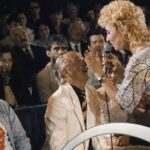
In one interview, Beneš talked about meeting Tito, whom he saw twice:
“Tito was a fine man. When they introduced me to him for the first time, he said: ‘So you’re the little one who hits so hard.’ I replied: ‘You’re not very tall yourself, comrade Tito.’ He burst out laughing.”
His father was Croatian, and his mother Serbian, so he used to say about himself: “I am a Serb, a Croat, and a Muslim. I am unaligned. A pacifist, a humanist. In the ring, I was a fighter, but I never wished harm upon anyone.”
Beneš was known as a powerful puncher but also as a poet. After the war, he published a book titled The Other Side of the Medal. For a time, he owned a café in Banja Luka where, as he said, he fought five times a day. “People came from all over the country to fight me. One day, I fought fifteen times. I learned what it means to be a sheriff in the Wild West,” he said.
He passed away on September 4, 2018, in Banja Luka, after a long and severe illness.