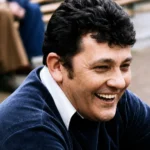
One of the most significant Yugoslav sculptors of the 20th century, Antun Augustinčić, was born on May 4, 1900, in Klanjec.
From 1918, he studied sculpture at the School of Arts and Crafts in Zagreb under Rudolf Valdec and Robert Frangeš. When the school was transformed into the Royal Academy of Arts and Crafts in 1922, he
continued his studies under Ivan Meštrović. After graduating in 1924, as a scholarship recipient of the French government, he went to Paris, where he studied at the School of Applied Arts (École des Arts décoratifs) from 1924 to 1926, and at the Academy of Fine Arts (Académie des Beaux-Arts). In 1925, he exhibited at the Salon of French Artists and in 1926 at the Salon des Indépendants.
Upon his return to Zagreb, he participated in graphic exhibitions in 1926 and 1927. In the same year, he held a solo exhibition of sculptures at the Galić Salon in Split. In 1929, he was among the founders of the art group “Zemlja” and was elected its vice president. He exhibited with “Zemlja” in Zagreb in 1929, 1931, and 1932, and in Paris in 1931, before separating from the group in 1933. Concurrently, his works were exhibited in Barcelona in 1929, London and Belgrade in 1930.
In the 1930s, he intensified his involvement in public monuments, which he had begun in 1928. By participating in and often winning numerous public competitions for monuments worldwide, he gained a
reputation that would place him among the masters of monuments, particularly equestrian ones, and eventually earned him the title of state sculptor.
In 1946, he became a professor (and later rector) at the Academy of Fine Arts in Zagreb, and in 1947, he was proclaimed a master of sculpture. He became a regular member of the Yugoslav Academy of Sciences and Arts (JAZU) in 1949 and led a master workshop for sculpture.
His most famous work, the Monument to Peace (The Equestrian), is located in front of the United Nations building in New York (a depiction of the monument can be found on the famous Yugoslav 100 dinar banknote from 1968). The Miner’s Monument is located in Geneva, while the Monument to the Victims of Fascism is in Addis Ababa.
Augustinčić received numerous domestic and international awards, and he donated a significant portion of his works to his hometown of Klanjec, where the Antun Augustinčić Gallery was opened in 1976.
He passed away on May 10, 1979, in Zagreb.