A true hit in the capital of Yugoslavia—and one that remains so to this day—was Ada Ciganlija. The sudden rise in popularity of the city’s largest river island, which Branislav Nušić called the “Water Flower,” along with the abundance of bathing areas that sprang up on the Čukarica side of Ada during the 1930s, prompted the city authorities as early as 1934 to include the redevelopment of Ada Ciganlija in urban plans for the coming decade—transforming it from a neglected wild island into a center of summer recreation.
About twenty years later, in 1957, the new authorities ordered the clearing of forest along part of Ada’s shoreline, as well as the creation of a large “public” beach to replace the earlier bathing facilities.
In 1961, engineer Milan Pećinar proposed connecting Ada to the mainland with large crossings, both southern and northern. This would form a lake, with a large sedimentation basin upstream to refresh the water trapped by the future barriers. Finally, in 1978, by linking the island to the city with an isthmus, the artificial Sava Lake was created, about four kilometers long, along with an embankment stretching over six kilometers. By the late 1970s, a detailed development plan for Ada Ciganlija had been completed, and by the end of the 20th century, Ada had grown into the largest recreational area not only in Belgrade but in this part of Europe.
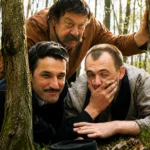
Many notable artists were great admirers of Ada Ciganlija. Among them, Momo Kapor stands out, having dedicated many paintings—and even a novel—to it. Alongside him and Peđa Ristić, others who spent time on Ada included Pavle Vuisić, Bora Todorović, Živan Saramandić, Dejan Medaković, and Bogdan Tirnanić.