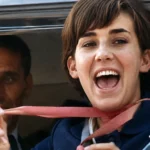
Almost every Yugoslav has seen the masterpiece Ko to tamo peva at least ten times, knows almost all the lines by heart, and occasionally uses them in everyday speech. The film, directed by Slobodan Šijan in 1980, follows passengers of a decrepit bus traveling from a remote Serbian village toward Belgrade on the eve of World War II.
However, it is less well known that it was originally conceived as a contemporary story, a television drama lasting about fifty minutes.
In the first version, the drama was supposed to be directed by Goran Paskaljević, who eventually withdrew, after which the young director and painter Slobodan Šijan took over. He proposed changing the script and turning it into a feature film instead of a TV production, which Dušan Kovačević readily accepted.
The main role was intended for Mija Aleksić, who on the first day of shooting informed the drama department that he was not feeling well and could not film, so the role went to Pavle Vuisić. The role of his son, Miško Krstić, was assigned by Šijan to Bogdan Diklić, but his theatre company did not allow him to leave for filming, so Aleksandar Berček was later cast instead. Dragan Nikolić was also not originally planned as the pop singer, but it turned out the role suited him perfectly and served as a great homage to Žika Pavlović and Jimmy Barka.
Filming began on April 4, 1980, and—unusually—it was shot in chronological order, from the opening song onward. It was agreed that filming would last only 21 shooting days, which meant working up to 20 hours a day. No reflectors were used, so the entire film has brown and black tones. Even for night scenes, the main light source was a campfire. The famous landscape “somewhere in Serbia” was actually the Deliblatska Peščara desert.
Throughout most of the film, an old woman dressed in black appears in the back seat. Various theories surrounded her character—from her representing death, to watching over piglets, to being a disguised Predrag Milinković, one of Yugoslav cinema’s most prolific supporting actors. In Dušan Kovačević’s screenplay, the old woman is described in great detail, even more than the other passengers, suggesting her importance. Šijan is also said to have confirmed at one point that she represents death and the tragic wartime events to come.
One of the two musicians, Miodrag Kostić, was discovered by Šijan during a military exercise at a radar station above Ralja. Mića was playing at a concert organized to entertain the army, and when he knelt down in front of Usnija Redžepova with his accordion, Šijan remembered the moment. Years later, he tracked him down and offered him a role. The younger musician was played by 11-year-old Nenad Kostić, Mića’s relative. He could never properly learn to play the mouth harp, so his scenes were recorded using playback.
Before filming began, the crew received a modern camera, newly acquired for “Filmske novosti” and originally used to follow Josip Broz Tito on his travels abroad. The camera worked well until April 25. That day, a scene was being shot in which Bata Stojković chases a rabbit (“Let me, I’m faster and more agile”). Suddenly, three men in civilian clothes appeared on set, showed identification, and took the camera away. No one was allowed to ask why; they simply continued filming with older cameras, one of which was the size of a wardrobe.
It was originally planned that in the final scene, during the bombing, animals would escape from the zoo, but this idea was abandoned because of the national state of emergency following Tito’s death.
The premiere took place on October 23, 1980, at the “Kozara” cinema in Belgrade, which no longer exists today. The film immediately exceeded all expectations. The audience hall shook with laughter.