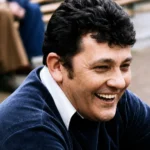
The renowned musician was born on May 11, 1953, in Novi Sad, in the family of his father Jovan Balašević and Veronika Dolenec. He grew up in a house on Jovana Cvijića Street and began writing songs back in elementary school, although he dreamed of becoming a soccer player. He dropped out of high school in the third grade because he didn’t like math, physics, and chemistry but managed to graduate as an external student and pass the entrance exam for geography studies.
He never graduated from university but in 1977, he joined the band Žetva, with which he recorded the hit song “U razdeljak te ljubim” the same year, achieving his first success. The single sold over 180,000 copies. The following year, he left the band where he had gained recognition and founded the group “Rani mraz” with Verica Todorović, with whom he performed at the festival in Opatija with the song “Prva ljubav.” During that year, he recorded several hit songs, achieving great popularity.
Just before recording the song “Računajte na nas,” former members of the band “Suncokret,” Biljana Krstić and Bora Đorđević, joined them. The song became very popular both among the authorities and the people of Yugoslavia and became a kind of anthem for the generation. After only two months of collaboration, Bora left the group due to differences in creative sensibilities between him and Balašević, and he formed the band Riblja čorba. Verica Todorović also left the group, so Biljana and Đorđe recorded the first album of Rani mraz, “Mojoj mami umesto maturske slike u izlogu.” Đorđe was a big fan of the Korni group even as a teenager, so he entrusted the entire production and arrangements of the album to former members of the Korni group.
At the Split Festival in 1979, Balašević won the first prize with the song “Panonski mornar,” confirming his popularity with 8 sold-out concerts in the Belgrade Dom sindikata hall. In 1980, he served in the JNA in Zagreb and Požarevac, where he filmed the TV series “Vojnici.” At the end of the year, he released the album “Odlazi cirkus,” the last album of the Rani mraz group. The album confirmed Balašević’s status and brought hits like “Priča o Vasi Ladačkom” and “Život je more.”
In early 1982, he began his solo career with the album “Pub,” which achieved notable success. He played a prominent role as a barber named Šaca in the TV series “Pop Ćira i pop Spira.” In the winter of the following year, he filled the Belgrade Sava Centar for the first time. This was followed by the album “Celovečernji the Kid” recorded in 1983. In April 1985, he recorded the highly acclaimed album “003,” featuring the song “Slovenska.” This album was produced by Josip Boček, just like the previous one. In 1984, in collaboration with TV Novi Sad, he also filmed a TV movie with the same title, “Celovečernji Kid.”
With his next album, “Bezdan,” Balašević formed a team that would be his regular studio and concert accompaniment. Đorđe Petrović was responsible for producing the album, and the arrangements were entrusted to keyboardist Aleksandar Dujin. Balašević emphasized that his most fruitful period of creativity began with this album. The next album, “Panta rei,” received extremely negative reviews, coinciding with a difficult period in his personal life. Nevertheless, one of Balašević’s most beautiful ballads, “Jednom…,” stood out on this album.
His next record, “Tri posleratna druga,” with the subtitle “Music from the novel of the same name,” recorded in 1989, followed the plot of the novel and was highly successful. It featured one of Balašević’s most beautiful ballads, “D-moll.” During the time when war broke out in Yugoslavia in 1991, the album “Marim ja…” was released. This album is remembered for its excellent lyrics, nostalgic notes, and songs like “Nevernik,” “Divlji badem,” and “Ringišpil.”
During that autumn, Balašević had his own column in Radio-TV Revija. In this column, while the war raged in the former Yugoslavia, Balašević sharply criticized all current, mainly political events in the country. He spent the war years hiding from the public eye. At the end of 1993, he recorded the album “Jedan od onih života.” The album was released during a severe economic crisis and the songs were inspired by the tragedies of war. During this period, Balašević openly criticized the government and expressed his opposition views at his concerts.
After a brief hiatus in 1996, he released the album “Naposletku.” The new songs were mostly recorded on acoustic instruments with the participation of the St. George string section. Instruments such as bassoon, oboe, trumpet, and violin were used.
In 2000, Balašević released the album “Devedesete,” in which he openly condemned the past decade. The song “Živeti slobodno” became the anthem of the October 5th changes, in which Balašević actively participated.
The love songs that were absent from the previous album were fully compensated for at the end of 2001, when he recorded the album “Dnevnik starog momka,” dedicated to his wife Olja. Each of the 12 songs on the album is named after a woman’s name, and by combining the initial letters of these names, the meaning of this album is revealed – “Olja is the best.” In 2004, he recorded an outstanding album titled after his first band, “Rani mraz.” The group “Apsolutno romantično” played a significant role in this album.
He was married to his wife Olivera, with whom he had daughters Jovana and Jelena and son Aleksa.
He passed away on February 19, 2021, at the age of 67, due to complications from COVID-19